Deerfield WI: A Community We’re Proud To Serve
Deerfield is a peaceful, welcoming community surrounded by farmland, winding country roads, and classic Wisconsin charm. Locals appreciate the easy access to Madison while still enjoying a quieter, tight-knit environment. Deerfield Community Park offers a great spot for families, ball games, and community events. Nearby Aztalan State Park gives residents an opportunity to explore one of Wisconsin’s most intriguing archaeological sites. Whether people move here for the scenic drives, the calm pace, or the historic Midwest character, it’s easy to see why homeowners love it here.
Serving this area motivates us to keep its homes safer, stronger, and ready for every season. When winter hits hard or spring storms roll through, a dependable chimney system becomes especially important, and we’re here to help protect that investment.
How Do Chimneys Hold Up During High Wind Storms or Tornado Conditions?
Wisconsin storms can deliver strong winds that strain a chimney’s structure. Even without a direct tornado impact, wind gusts can weaken mortar joints, shift bricks, loosen flashing, or damage chimney caps. Our company has seen cases where homeowners didn’t realize that a wind event had stressed their chimney until months later, when cracks widened or bricks began to loosen.
When evaluating storm related issues, we look for:
- Mortar hairline cracks that wind pressure may have expanded
- Caps or chase covers bent or lifted just enough to let water in
- Flashing that has lifted slightly along the roof line
- Bricks beginning to spall from wind driven moisture
- Subtle leaning that may indicate pressure on the structure
- Gaps forming between the flue liner and masonry
If a windstorm passes through Deerfield, we encourage homeowners to schedule a post storm check. Even small vulnerabilities can escalate once water infiltrates or winter temperatures arrive. A chimney doesn’t have to collapse or show dramatic leaning to have been compromised.
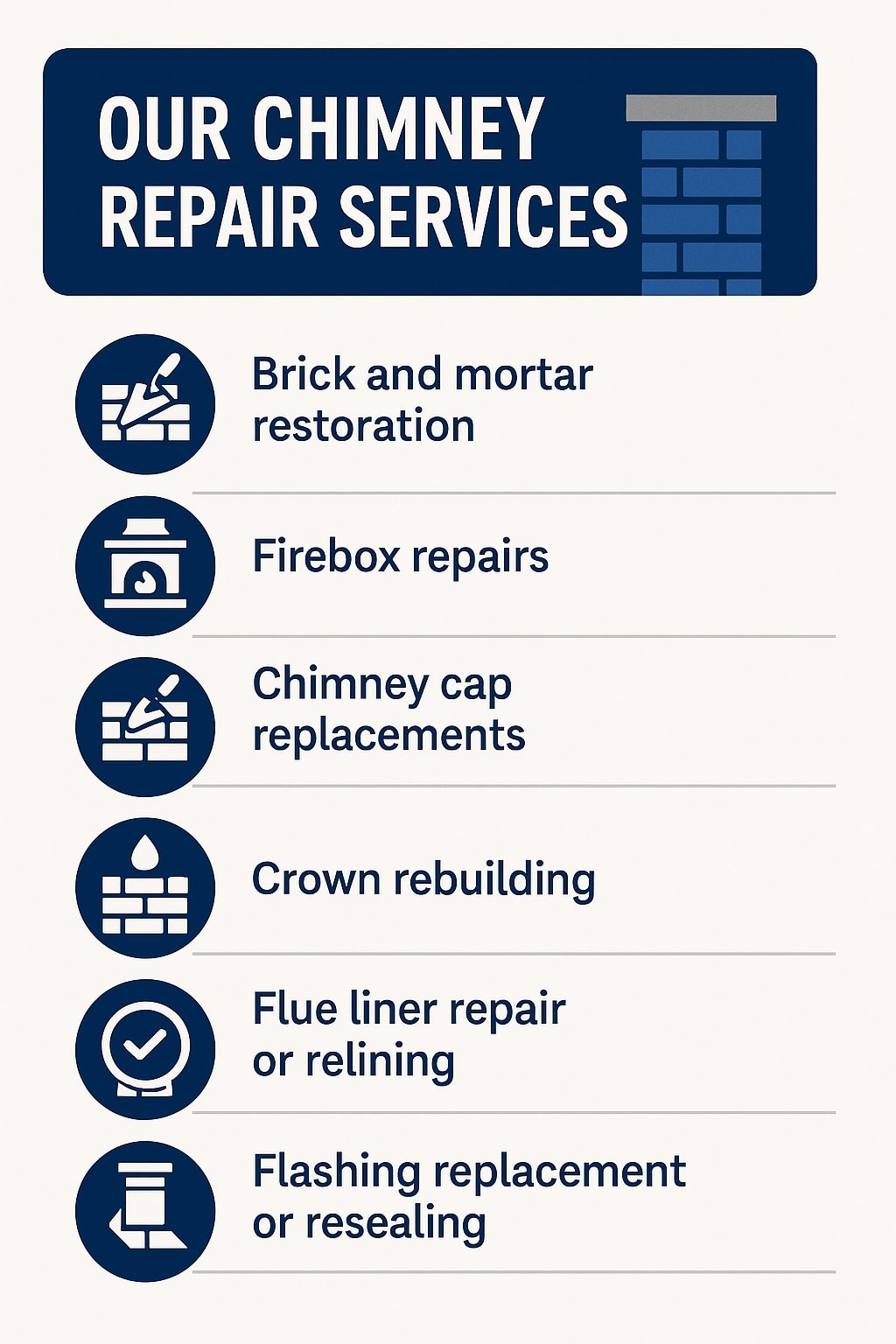
Once we perform a detailed inspection, we recommend repairs such as repointing, cap replacement, flashing reinforcement, or full structural rebuilds when necessary. Our goal is to ensure the chimney remains stable and performs as safely as possible through future storms.
After Heavy Rain or Flooding, What Steps Should Homeowners Take Before Using Their Fireplace Again?
Deerfield’s heavy rains and spring thaw cycles can push a lot of moisture into the masonry. Even without visible flooding, a saturated chimney can become risky to use. Lighting a fire when the system is wet can create steam pressure, worsen cracks, and contribute to swift deterioration of the liner or firebox.
We advise homeowners to:
- Avoid using the fireplace until the chimney is professionally inspected. Moisture can hide inside the walls, behind the firebrick, or within the liner.
- Check for odors, discoloration, or damp walls near the fireplace. These may indicate deeper water intrusion.
- Let us evaluate whether the crown, cap, and flashing allowed water entry. Sometimes a small failure becomes a big leak during heavy rain.
- Allow time for the chimney to dry fully after repairs or waterproofing. Burning too soon can damage masonry that is still damp.
- Consider waterproofing once repairs are complete. This helps slow the rate of future saturation and protects your masonry through freeze thaw cycles.
A flooded or heavily soaked chimney can deteriorate faster than you’d expect, and we take extra care in making sure your system recovers properly.
How Fast Can Crumbling Mortar Compromise a Chimney’s Stability?
Mortar deterioration often starts slowly, but once it reaches a certain point, the decay can accelerate. In Wisconsin’s climate, a single season of moisture exposure followed by freezing temperatures can transform mild erosion into significant structural loss.
Our team has seen chimneys that appeared stable in the spring but developed deep mortar gaps by mid winter due to repeated freezing of trapped moisture. When mortar crumbles, bricks shift, water penetrates further, and the chimney may begin to lean. If flue tiles move or crack, gaps can form where heat and embers may escape into surrounding framing.
Key warning signs include:
- Grit or sand falling onto the roof or ground near the chimney
- Bricks that begin to wiggle when tapped
- Mortar lines pulling away from the masonry
- Fast forming efflorescence after rain
- Cracks that widen each season
Once mortar begins to fail, we recommend repointing or tuckpointing right away. If structural settling has already started, we may need to rebuild sections or reinforce the stack. Our goal is to stop deterioration before it threatens the integrity of the entire chimney.
Are Old, Unlined Chimneys More Prone to Hidden Interior Decay?
Older homes in and around Deerfield sometimes still have unlined chimneys or clay liners that have worn thin. An unlined chimney may appear strong on the outside, but the interior can be undergoing rapid deterioration due to heat exposure, moisture, or creosote acids.
Unlined chimneys are especially susceptible to:
- Interior mortar erosion that cannot be spotted from the outside
- Gaps forming between bricks and the flue area
- Moisture that migrates through the masonry and softens the interior
- Faster heat transfer into nearby wood framing
- Creosote acids that eat away at the masonry
When we inspect older chimneys, we use specialized cameras to evaluate the inside of the flue and identify hidden structural issues. Even microscopic cracks can affect performance, so our team takes time to examine every inch. If we find damage, we may recommend stainless steel relining, fireclay flue tile repair, or rebuilding interior sections.
Our company wants to help preserve Deerfield’s older homes while also ensuring the chimney performs as safely as possible with today’s fireplaces and fuels.
Can Nearby Additions or Trees Affect a Chimney’s Draft Years Later?
Surprisingly, yes. A chimney that drafted well when the home was built may begin experiencing problems years later as the surroundings change. New home additions, roofline modifications, or growing trees can shift the airflow around the chimney. Draft is heavily influenced by pressure zones, and even small changes in nearby structures can affect how smoke travels upward.
Common draft changing conditions include:
- A new second story built nearby
- Replacement roofing that alters roof pitch or height
- Mature trees that now overhang the house
- Neighboring construction that blocks wind flow
- New vents or fans that compete for air within the home
We address these issues by evaluating the chimney height, assessing airflow restrictions, and checking for pressure imbalances inside the home. Solutions may include extending the chimney, installing a draft improving cap, or making ventilation adjustments that help the fireplace operate more consistently.
Contact Hansen & Sons Chimney & Fireplace for Chimney Repair in Deerfield WI
If your chimney is showing signs of wear, leaking, drafting poorly, or simply hasn’t been evaluated in years, our team is here to help. Hansen & Sons Chimney & Fireplace offers thorough inspections, long lasting repair solutions, and service you can count on. Call us today to schedule your appointment and keep your Deerfield home prepared for every season. For chimney repair services near you, we’re the team to trust.