
Hansen & Sons Chimney & Fireplace: Expert Chimney Sweeping In Verona, WI
Verona, WI is a community that perfectly balances small-town charm with modern growth, and at Hansen & Sons Chimney & Fireplace, we are dedicated to maintaining the warmth and functionality of homes throughout this vibrant area. Our team provides comprehensive chimney sweeping and maintenance services designed to help your system operate as effectively as possible. We understand that a well-maintained chimney is essential for enjoying your fireplace during those cold Wisconsin winters. Whether you own a historic property near the center of town or a newer build closer to the Epic campus, we bring the same level of care, technical expertise, and respect to every project. Our goal is to help you protect your home investment while reducing risks associated with neglected flue systems.
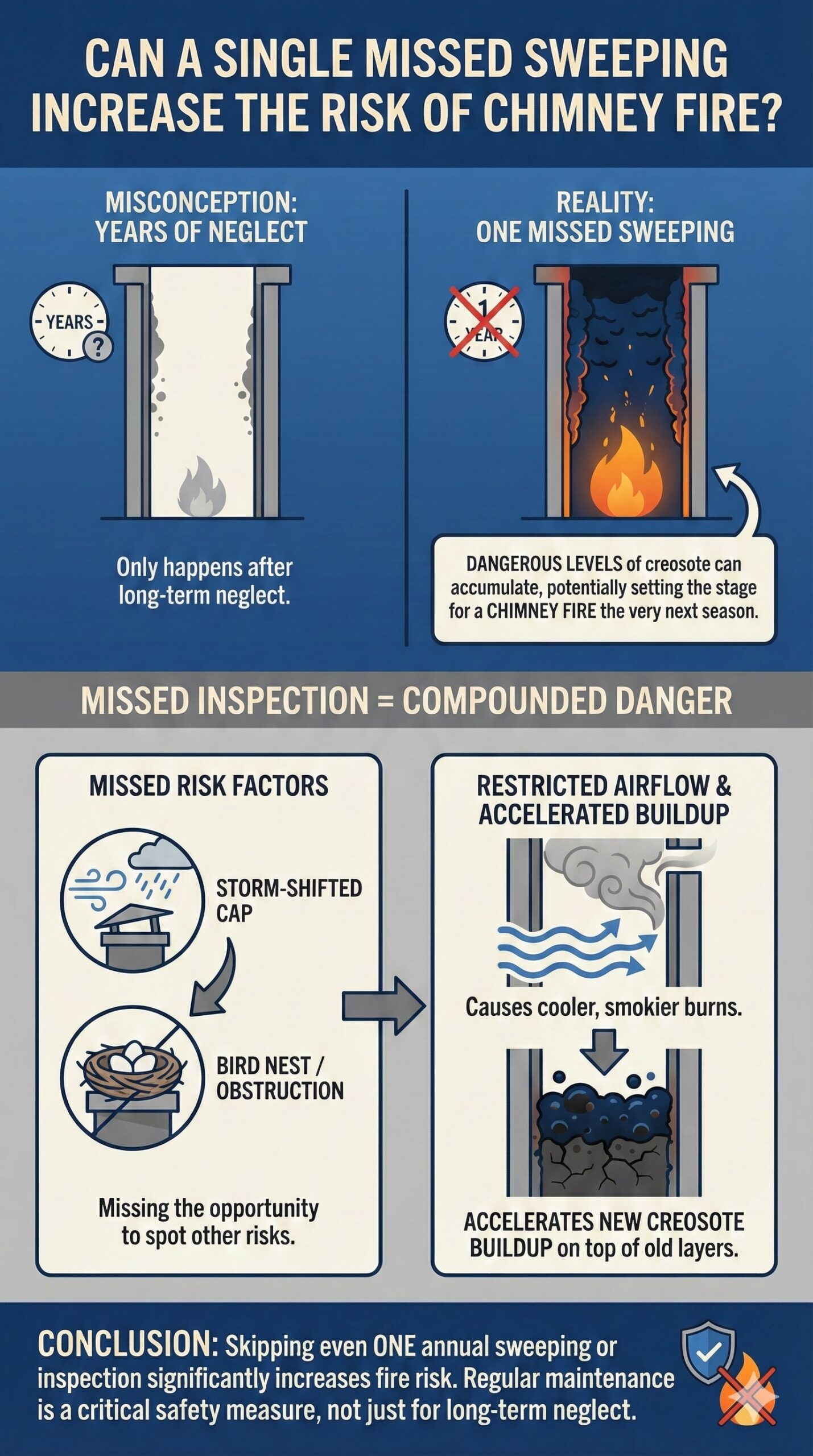
Can a Single Missed Annual Inspection Allow Enough Creosote To Ignite a Chimney Fire the Following Season?
It is a common misconception that chimney fires only happen after years of total neglect. The reality is that skipping even a single annual sweeping or inspection can lead to a situation where dangerous levels of creosote accumulate, potentially setting the stage for a chimney fire the very next season. The rate at which creosote builds up depends on several variables, including the type of wood burned, the burning temperature, the airflow, and the physical structure of the flue itself. If a household burns unseasoned or “green” wood, which contains high moisture content, the combustion process is incomplete. This results in cooler smoke that condenses rapidly as it moves up the flue, depositing thick layers of tar-like creosote. In a single heavy-use winter, this can create enough accumulation to be hazardous.
Creosote generally forms in three stages.
- Stage one is a fluffy, soot-like powder that is relatively easy to brush away.
- Stage two is a crunchy, porous texture that clings more stubbornly to the flue tiles.
- Stage three is a dense, wax-like or glaze substance that is highly combustible and extremely difficult to remove without chemical treatments or specialized rotary tools.
If your system develops stage three glaze during a particularly harsh winter and you skip the spring or summer inspection, that fuel source remains lining your chimney. When you light the first hot fire of the next season, the intense heat can ignite that glaze.
Furthermore, a missed inspection means missing the opportunity to spot other risk factors that compound the danger of creosote. For example, if a storm shifted your chimney cap or a bird built a nest during the off-season, airflow could be restricted. Restricted airflow causes the fire to burn cooler and smokier, which accelerates new creosote buildup on top of the old layers. This compounding effect means that a chimney that was “borderline” acceptable one year can become a significant hazard by the middle of the next winter if not serviced. We strongly recommend sticking to a strict annual schedule to monitor these variables closely and keep the risk of ignition as low as possible.
Serving the “Hometown U.S.A.” – Verona, WI
Verona, WI, affectionately known as “Hometown U.S.A.,” is a location we are incredibly proud to serve. This city offers a unique blend of rural heritage and high-tech innovation, largely due to the presence of Epic Systems, whose sprawling, whimsical campus is a local landmark. However, Verona is much more than just a business hub. It is a community deeply connected to the outdoors and active living. Residents here enjoy access to some of the state’s best recreational trails, including the Military Ridge State Trail and the Ice Age National Scenic Trail, which offer year-round opportunities for hiking, biking, and snowshoeing.
Families are drawn to Verona for its excellent schools and the strong sense of community fostered by events like the annual Verona Hometown Days. The city features beautiful green spaces such as Fireman’s Park, which serves as a gathering place for summer swimming and community festivals. We love working in Verona because the homeowners here truly care about maintaining the integrity and comfort of their properties. From the quiet residential streets near Harriet Park to the expansive lots in the newer subdivisions, there is a diverse array of architectural styles that we have the privilege of maintaining. We understand that after a long day exploring the Badger State Trail or working at a demanding job, the residents of Verona value coming home to a fireplace that functions reliably.
How Does Burning Different Fuels Change the Rate of Creosote Buildup & The Need For Sweeping?
The type of fuel you choose to burn has a direct and profound impact on the chemistry inside your chimney, the rate of residue accumulation, and the frequency with which you may need professional sweeping. While all combustion produces some byproducts, the differences between wood, pellets, and gas are substantial.
- Wood Burning: Wood is the most traditional fuel but also the most variable. Hardwoods like oak, maple, and ash are generally denser and burn hotter than softwoods like pine or spruce. Hotter fires result in more complete combustion, meaning less smoke and less creosote condensation in the flue. However, the most critical factor with wood is moisture content. Burning wood with a moisture content above 20 percent acts as a massive drain on heat energy because the fire must boil off the water before it can burn the wood fiber. This results in cool, heavy smoke that coats the chimney liner in creosote rapidly. Homeowners who burn wood exclusively, especially if they harvest it themselves, typically require the most frequent sweeping, at least once a year or after every cord of wood burned.
- Pellet Stoves: Pellet stoves are mechanically driven and burn compressed sawdust pellets with very low moisture content. Because the fuel is uniform and the air-to-fuel ratio is controlled by electric fans, the burn is incredibly clean compared to cordwood. Consequently, pellet stove venting systems usually accumulate a fine, dry fly ash rather than sticky creosote. However, this does not mean they are maintenance-free. This fine ash can coat the interior of the venting pipe and the mechanical parts of the stove, such as the exhaust blower and heat exchanger. If this ash is not removed, it can choke the stove’s airflow, leading to poor performance and potential mechanical failure. While dangerous creosote glaze is less common in pellet stoves, the volume of ash requires regular attention to keep the unit running as effectively as possible.
- Gas Appliances: Gas fireplaces (natural gas or propane) are often marketed as “clean burning,” and while they do not produce creosote in the same way wood does, they are not immune to dirty chimneys. Gas combustion produces moisture and distinct chemical byproducts that can lead to corrosive deposits on the liner. Furthermore, gas logs can produce soot if the logs are displaced or if the air shutter is improperly adjusted, leading to carbon buildup that blocks the flue. We also find that because gas fireplace owners often assume their systems need zero maintenance, they are more prone to undetected blockages from bird nests or debris, as they aren’t looking up the chimney as often.
How Do Spring Pollen or Autumn Leaves Contribute To Blockages Compared To Winter Ice?
When homeowners think of chimney blockages, they often picture thick creosote or perhaps a heavy layer of snow and ice capping the flue. However, biological debris from the surrounding environment—specifically pollen in the spring and leaves in the autumn—poses a distinct and often underestimated threat to chimney airflow. The nature of these blockages differs significantly from winter ice, both in how they form and how they affect the system.
Spring Pollen & Sticky Debris
In the spring, Verona and the surrounding areas can experience heavy pollen counts. While pollen seems microscopic, it is often sticky and resinous. When it enters a chimney flue that already has a layer of textured soot or creosote, it acts as a binding agent. It can create a fuzzy, sticky layer that traps dust and other particulate matter effectively. This doesn’t usually cause a total blockage on its own, but it rapidly increases the surface roughness of the liner. A rougher liner creates more drag on the smoke, slowing down the draft. A slower draft allows smoke to linger longer in the chimney, which in turn leads to faster creosote deposition when you do start burning again. Furthermore, this organic matter can become a food source for mold or bacteria in a damp, unused chimney during the humid summer months, leading to unpleasant odors entering the home.
Autumn Leaves & Nesting Material
Autumn leaves present a more immediate physical obstruction. If a chimney lacks a proper cap, or if the mesh screen is damaged, falling leaves can accumulate quickly, especially in chimneys with offsets or bends. Unlike ice, which may melt with rising heat, a plug of dry leaves is highly combustible. If you light a fire beneath a leaf blockage, you risk igniting a chimney fire right at the top of the flue or forcing smoke back into the living room. Additionally, autumn is when chimney swifts and other critters are often vacating, but they may have left behind substantial nesting materials made of twigs, mud, and saliva. These nests are dense and can completely seal off a flue.
Winter Ice
Winter ice blockages usually form at the cap or crown and are often caused by the freezing of condensation or precipitation. While ice can physically stop smoke from exiting, it is a temporary state tied to temperature. Ice eventually melts or sublimates. Leaves and pollen, however, are persistent. They do not go away on their own; they must be physically removed. If left unchecked, layers of decomposing leaves and organic sludge can form a compost-like plug that absorbs water, accelerating the deterioration of mortar joints and metal liners from the inside out.
What Happens If You Light A Fire When The Flue Is Still Damp After Heavy Rain?
Lighting a fire in a chimney that is damp or wet from heavy rain is a scenario that many homeowners might not think twice about, yet it can lead to a host of performance issues and potential structural damage. The chimney system relies on a delicate balance of physics – specifically, the principle that hot air rises – to draw smoke out of the home. Moisture disrupts this process fundamentally.
The “Cold Plug” & Smoke Backup
A damp flue is almost always a cold flue. Water has a high heat capacity, meaning it absorbs a significant amount of energy before it changes temperature. When you light a fire under a wet chimney, the initial heat produced by the kindling is immediately absorbed by the damp masonry or metal liner rather than warming the air column to create a draft. This creates a “cold plug” of heavy, wet air that sits in the chimney. Because the smoke cannot push through this heavy air block, it follows the path of least resistance: back into your living room. This reversal of flow, often called puff-back, fills the room with smoke, ash, and carbon monoxide.
Steam & Structural Stress
If you do manage to get the draft established, the heat will begin to turn the moisture inside the chimney into steam. Water expands roughly 1,600 times in volume when it turns to steam. If this moisture has soaked into the porous clay flue tiles or the mortar joints between bricks, the rapid expansion of steam can exert tremendous pressure from within the masonry materials. This can cause “spalling,” where the face of the brick pops off, or cause clay liners to crack and fracture. We call this thermal shock. Repeatedly heating a water-saturated chimney accelerates the aging process of the masonry significantly, turning what should be a 50-year structure into one that needs repairs in a fraction of that time.
Chemical Reactions & Smells
Finally, mixing water with creosote creates a mild acid and generates a very potent, unpleasant odor often described as smelling like a “wet campfire” or a dirty ashtray. When you heat this mixture, the smell intensifies and can permeate curtains, furniture, and carpets. Furthermore, the acidic slurry created by water and soot can eat away at mortar joints and rust out metal damper components much faster than dry soot would. We always recommend ensuring your chimney has a proper cap and waterproofing to keep the interior dry, allowing the system to function as intended.
Trust Hansen & Sons Chimney & Fireplace For Your Sweeping Needs
At Hansen & Sons Chimney & Fireplace, we are committed to helping the residents of Verona, WI keep their homes warmer and safer. We believe that regular maintenance is the key to avoiding costly repairs and ensuring peace of mind during the heating season. If it has been more than a year since your last sweep, or if you are unsure about the condition of your flue, do not leave it to chance. Contact us today to schedule your comprehensive chimney sweeping and inspection. Let us handle the dirty work so you can relax and enjoy your fireplace.